The best cruise cabins to book if you are prone to severe seasickness
Discover the best cruise cabin locations to minimise motion sickness, from midships balconies to lower-deck strategies on major UK cruise lines.
For some travellers, the dream of a cruise around the Norwegian Fjords or a crossing to New York on Cunard’s Queen Mary 2 is tempered by the fear of motion sickness. While modern stabilisers have revolutionised the cruising experience, making voyages on the latest P&O Cruises or MSC vessels remarkably smooth, the ocean remains a dynamic environment. If you are particularly sensitive to movement, the location of your cabin is the single most important decision you will make during the booking process. Choosing the wrong deck or position can result in a week of discomfort, while the right selection can mean the difference between a holiday spent in the buffet and one spent horizontal in your cabin. For those prone to severe seasickness, precision is paramount; you cannot simply leave it to a 'Guaranteed Cabin' lottery.
The Physics of Motion: Midships and Mid-height
If you think of a cruise ship like a playground see-saw, the motion is most pronounced at either end. When a ship pitches (tilts forward and backward), the bow (front) and the stern (back) move several metres up and down, while the centre point remains relatively stable. Similarly, when a ship rolls (side to side), the movement is amplified on higher decks. For anyone prone to nausea, the gold standard is a cabin located midships on a lower deck.
- Stay Low: Aim for Decks 3, 4, or 5 depending on the ship's layout. On MSC Virtuosa or P&O’s Iona, these decks are closer to the ship’s centre of gravity.
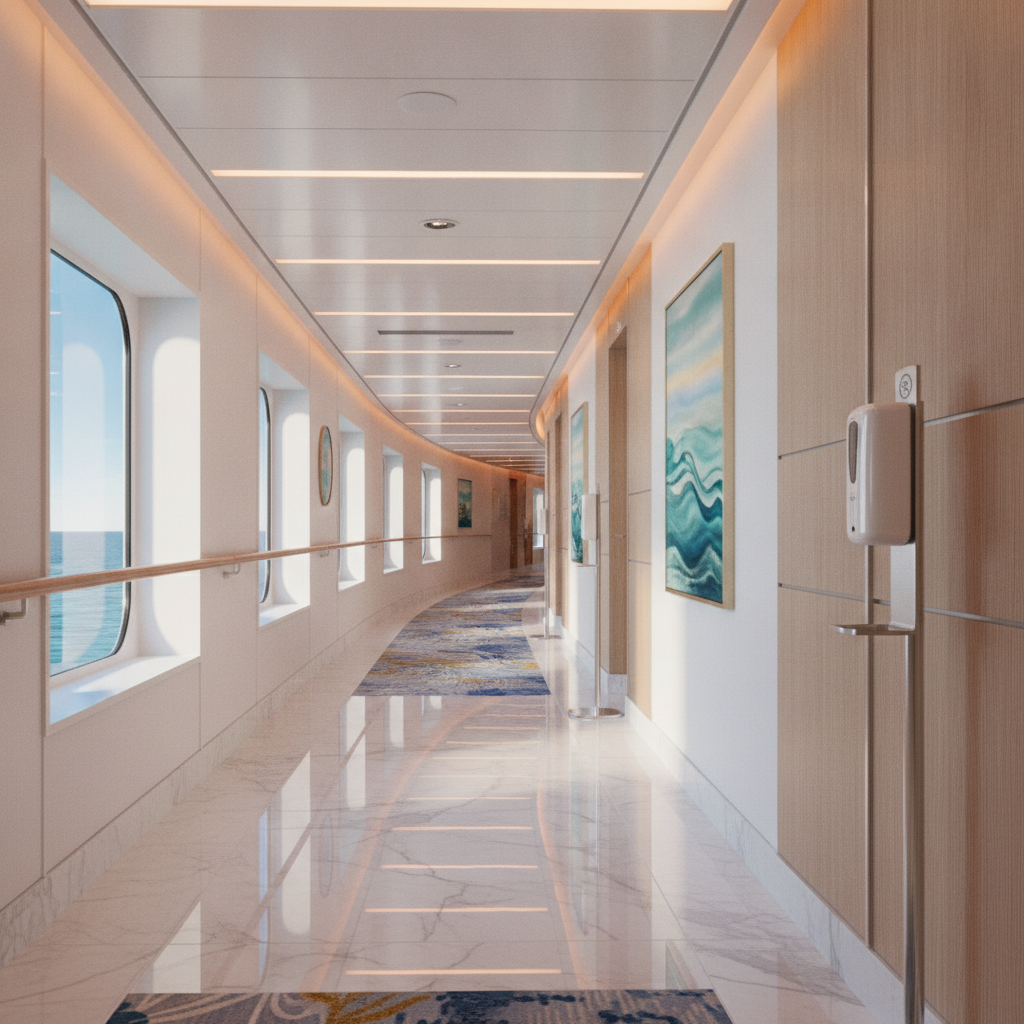
- Stay Central: Look at the deck plan and find the vertical lift lobby that sits in the middle of the ship. Your cabin should ideally be between the forward and aft lift banks.
- Avoid the Extremes: Steer clear of cabins at the very front (which bear the brunt of the waves hitting the hull) or the very back (where you may feel both the pitch of the sea and the vibrations of the engines).
The Psychology of a Balcony vs Inside Cabin
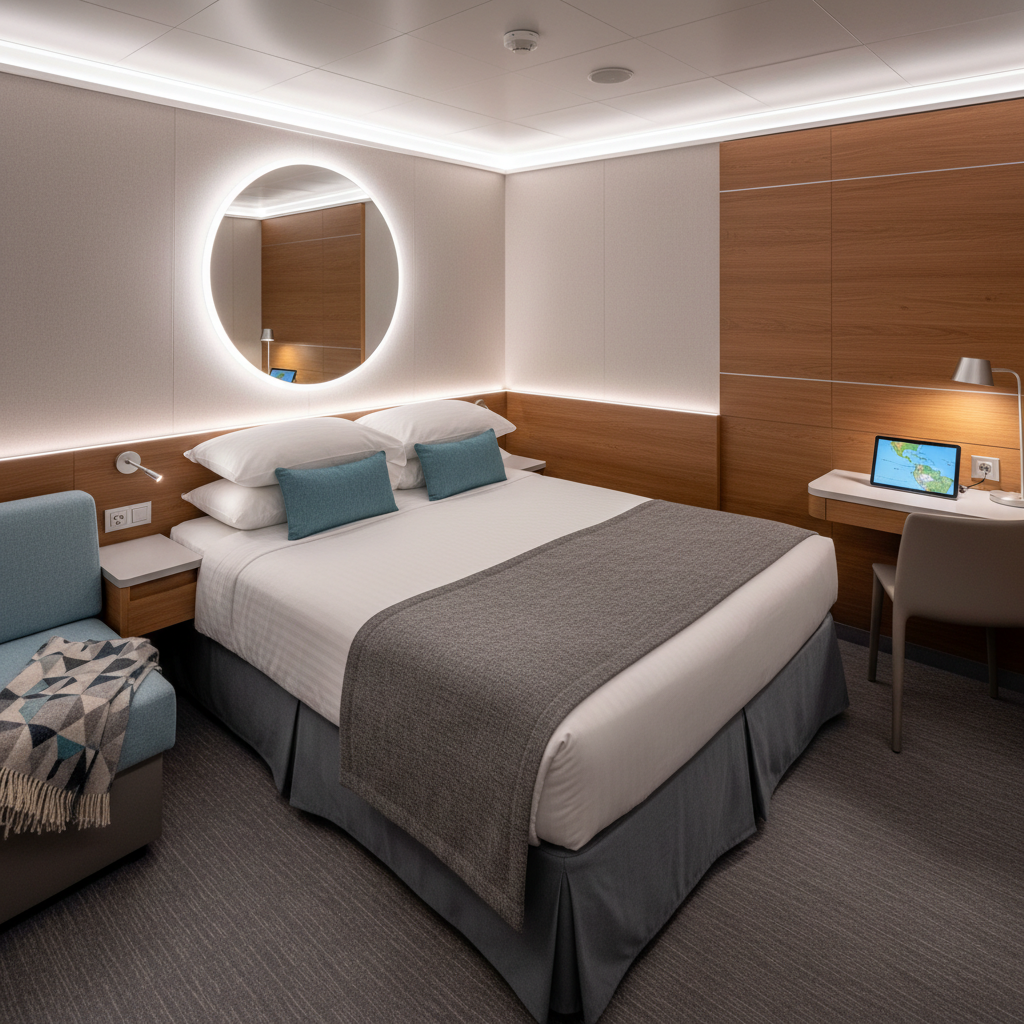
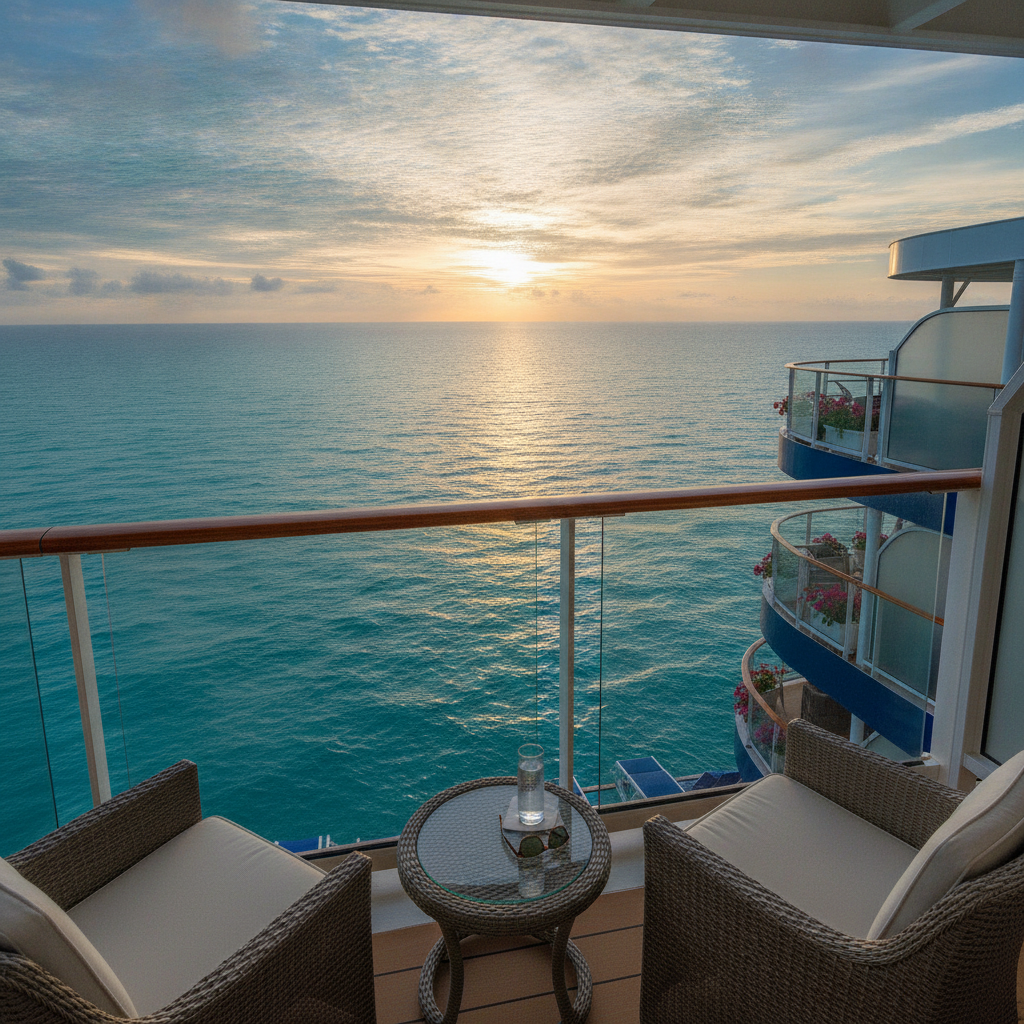
There is an ongoing debate among UK cruisers regarding whether an inside cabin or a balcony is better for seasickness. For severe sufferers, a Balcony Cabin or at least an Outside (Oceanview) cabin is almost always the superior choice. This is due to the 'horizon effect'; your brain and your inner ear need to synchronise. If your eyes can see the horizon, your brain can process the movement the inner ear is detecting.
- The Horizon Fix: Watching the steady line of the horizon helps recalibrate your equilibrium. Ships like those in the Princess Cruises fleet have excellent balcony options that provide a private space to get fresh air.
- Fresh Air: Sometimes, the recycled air of an inside cabin can feel stifling when you are feeling unwell. Being able to open the patio door for a cool sea breeze is a literal lifesaver.
- The Inside Exception: Some regular travellers on Fred. Olsen’s smaller ships (like Borealis or Bolette) argue that a low-deck inside cabin is better because there are fewer visual distractions. However, for most, the lack of natural light increases the sense of disorientation.
Ships and Itineraries: Size Matters
When booking, the vessel itself is as important as the cabin. Modern ‘mega-ships’ from Royal Caribbean (such as the Oasis-class ships) or Celebrity Cruises’ Edge-series are equipped with highly sophisticated computer-controlled stabiliser fins. These act like underwater wings to counteract the roll of the sea.
- Modern Stabilisers: Newer builds from 2015 onwards generally offer a smoother ride than older, smaller vessels. If you are worried, look at P&O’s Arvia or Virgin Voyages’ Scarlet Lady.
- Itinerary Selection: Avoid the ‘Bay of Biscay’ or the North Sea in late autumn if you are sensitive. Instead, choose a fly-cruise from the UK to the Mediterranean. You can fly to Palma or Barcelona to join a Marella Cruises ship, skipping the potentially choppy waters of the English Channel and the Atlantic.
- Pricing Reality: For a midships balcony cabin on a peak summer Mediterranean sailing with P&O, expect to pay between £1,100 and £1,400 per person. Choosing a ‘Select Price’ over a ‘Saver Fare’ is vital here, as it allows you to hand-pick your specific cabin number.
Cabin Features to Look For (And Avoid)
Not all cabins are created equal, even if they are in the right part of the ship. When studying the deck plan, you should look for specific layouts that might exacerbate or alleviate your symptoms.
- Avoid Forward-Facing Balconies: These are often found on higher decks of ships like P&O’s Ventura. While they offer great views, they catch the full force of the wind and the most drastic upward motion.
- Obstructed Views: On many ships, Deck 8 or 9 may have cabins with ‘obstructed views’ (often lifeboats). These are often cheaper (sometimes starting around £800-900 for a week). While they provide natural light, the obstruction might prevent you from getting a clear view of the horizon, which is counterproductive for seasickness.
- Hull-Hole Balconies: Found on lower decks of some older ships or specific Queen Mary 2 decks, these are balconies cut out of the ship's steel hull. They provide privacy and are closer to the waterline (less motion), making them an excellent choice for seasickness sufferers on a Transatlantic crossing.
Practical Tips for the UK Cruiser
Once you have secured that perfectly placed midships cabin on Deck 4, there are several practical steps you can take to prepare for your voyage from Southampton or beyond.
- Visit the Pursers’ Desk: Most ships, including those in the Cunard and P&O fleets, provide motion sickness medication (often meclizine or cyclizine) at the Guest Services desk, though they may charge a small fee or refer you to the medical centre for stronger draughts.
- Check the Deck Above: Always ensure there isn’t a noisy nightclub or a busy galley (kitchen) directly above your midships cabin. You want a cabin that is ‘sandwiched’ between two other decks of cabins to ensure a quiet environment, which helps you rest if you are feeling unwell.
- Booking Tactics: Use a deck plan aggregator. Websites and specialist cruise agents can often see ‘real-time’ availability. If you are booking with Marella, make sure to use their ‘Select Your Cabin’ feature during the checkout process (typically an extra £50-£100) to lock in those central coordinates.
Small Ships vs Large Ships for Stability
There is a common misconception that larger ships are always better. While it is true that a 180,000-tonne P&O Iona will handle a swell better than a small yacht, some smaller luxury or expedition ships are designed with incredibly advanced stabilisation. However, for most UK travellers on a budget, the rule of thumb remains: bigger is usually steadier.
- The MSC Factor: MSC Cruises often has very competitive pricing from Southampton, with 7-night Northern Europe cruises often starting as low as £600 per person. Their newer ships (Grandiosa-class) are massive and stable, but their central cabin blocks sell out first. Book at least 8-10 months in advance to secure the low-midships spots.
- Fred. Olsen and Saga: These lines specialise in smaller ships. While they offer a more intimate experience, you will feel the ocean more. If you are set on these lines, the 'Low and Squarely in the Middle' rule is non-negotiable.
Always check the specific ship’s deck plan at the time of booking, as cabin categories and numbering conventions change. By prioritising a low-deck, midships balcony, you give yourself the best possible chance of enjoying the exquisite dining and entertainment that modern cruising has to offer, rather than viewing the journey through the lens of a green complexion.
Not sure where to start?
Answer a few quick questions and we'll match you with your perfect cruise.